
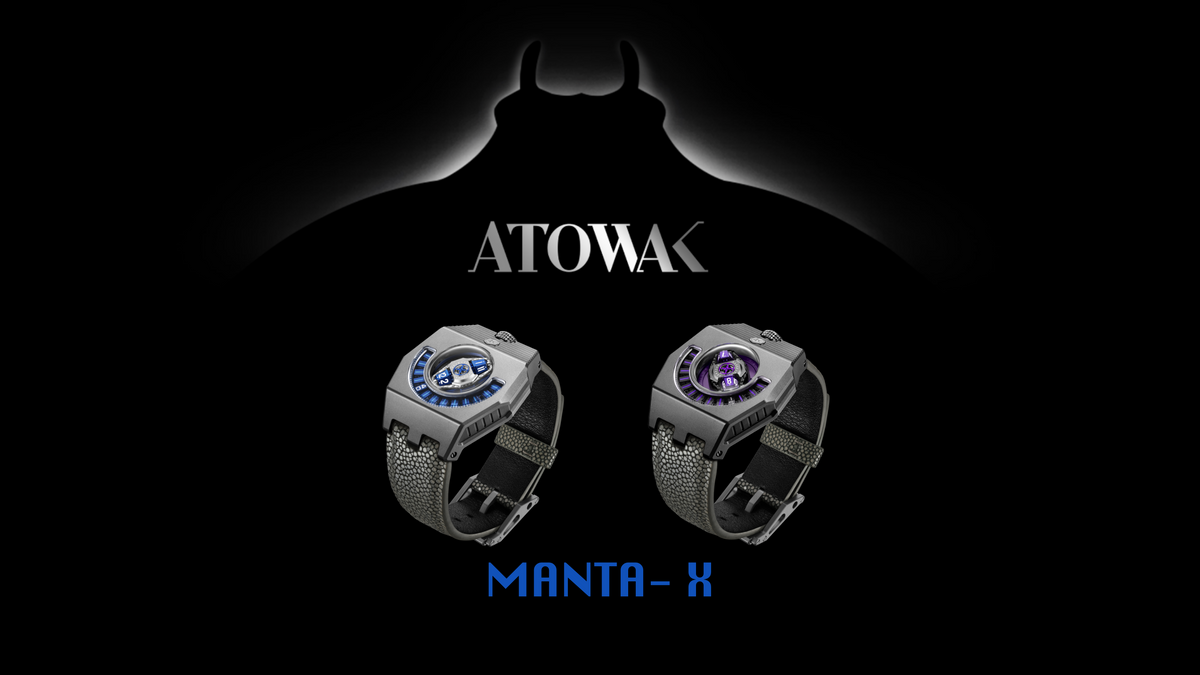
What if the hour did the work of a hand? Wandering-hour watches make a numeral travel across a minute scale, so reading time becomes a small moving scene. ATOWAK’s Manta-X belongs to this wider history, but understanding its place requires separating a shared idea from very different mechanical executions.
A seventeenth-century beginning, carefully told
Audemars Piguet traces the wandering-hour story to a 1655 commission associated with Pope Alexander VII and the Campani brothers. In the brand’s account, a desire for a quiet, legible night clock drove the project. It is a historical account attributed to its source, not a reason to describe every later wandering-hour watch as silent.
The basic reading principle survived the move from clock to wrist: the active numeral indicates the hour, while its position along a graduated arc gives the minutes. The engineering used to prepare and transfer the next numeral can vary significantly.
Why Starwheel matters

Audemars Piguet revived the idea in its Starwheel wristwatch in 1991. The attraction was not simply the absence of a conventional hour hand. It made the act of reading visible: numerals entered the scale, traversed it and gave way to the next hour.
That heritage does not turn every unconventional display into the same complication. Jumping hours, retrograde hands and rotating sculptural displays describe different operations. Comparing them as though they were interchangeable obscures precisely what makes each interesting.
Manta-X: the module is the story
ATOWAK lists its AK-07BA as a modified Sellita SW200 with its own display module. The Manta-X uses a hexa-prism wandering-hour system housed in Grade 5 titanium, with a stated 38-hour reserve and 30-metre water resistance. These are manufacturer claims and specifications, not the outcome of a Malichus bench test.
The meaningful distinction is between the energy-producing base and the mechanism that presents the time. A familiar base calibre can support an unfamiliar display, but does not eliminate the specialist service needs of the added module.
A comparison worth making

Do not start by asking whether one watch gives you an Urwerk or an MB&F “for less.” Start with four questions: how quickly can you read it, how clearly does the hour transfer, how does the case fit, and who can maintain the display?
Sharing titanium, sapphire or an unconventional silhouette does not establish comparable finishing or development costs. Nor does an unusual display make the watch more accurate. Those are separate properties requiring separate evidence.
The point of choosing differently
Our view is that wandering hours remain compelling because they make a familiar task feel newly observable. A buyer who values that interaction has a concrete reason to investigate Manta-X. A buyer seeking a thinner case, conventional servicing or maximum glance legibility may reach another conclusion.
Malichus sells ATOWAK. Read the manufacturer’s current specification alongside our ATOWAK selection, then ask for a real-time display demonstration and module-service terms. The strongest argument is what the mechanism actually does, not a borrowed comparison with a more expensive name.


