
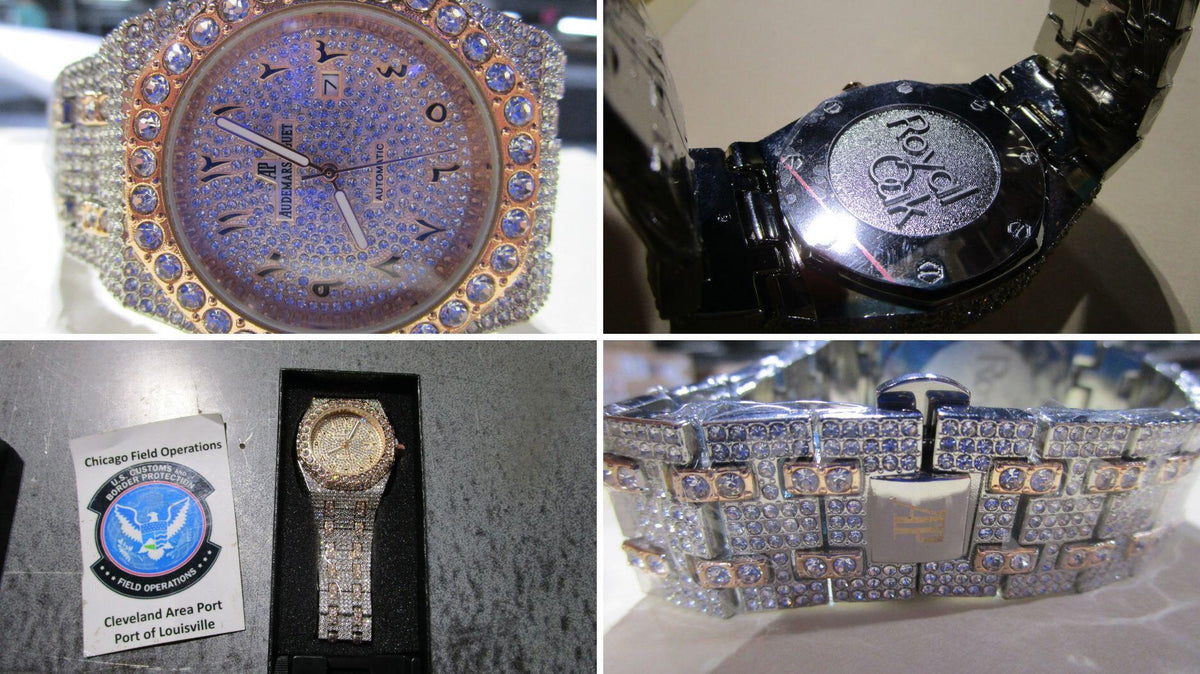
460 watches, one borrowed identity
A parcel can carry hundreds of watches. What it cannot carry quite so easily is the history, workmanship and accountability that give a luxury watch its value. That distinction became unusually tangible in Louisville, Kentucky, when U.S. Customs and Border Protection intercepted 460 counterfeit watches bearing Audemars Piguet trademarks on 23 October 2026. The shipment had arrived from Hong Kong and was destined for a residence in Texas. CBP’s trade specialists deemed the watches inauthentic and seized them for counterfeit trademarks.
The arresting figure is more than $66 million: the combined manufacturer’s suggested retail price had the watches been genuine. It is also the figure most likely to obscure the story. No legitimate collection worth that amount was recovered. The authorities stopped imitations borrowing an identity whose commercial power had been built elsewhere.

What the $66 million actually measures
A hypothetical retail valuation provides a reference point for enforcement. It does not establish what the counterfeit shipment cost to produce, what its intended buyers would have paid, or how much revenue the manufacturer lost. Nor does it tell us what comparable genuine watches would fetch in the secondary market.
The distinction matters economically. A buyer deliberately paying a small sum for an imitation is not automatically a lost buyer of the authentic watch. A buyer deceived into paying a genuine-watch price faces a very different transaction. Both involve counterfeiting; the substitution, damage and incentives differ. Without evidence about intended sales, assigning the whole hypothetical retail total to lost revenue would confuse an enforcement metric with an economic conclusion.
A shipment is evidence, not a market census
The route is documented: Hong Kong to Texas, intercepted in Louisville. A point of dispatch does not, by itself, establish where every component was manufactured. The destination does not establish the recipient’s knowledge or criminal responsibility. The public account does not identify the intended selling prices or authenticate the imitation of any particular reference.
The seizure demonstrates a concrete attempt to move counterfeit goods. It cannot, on its own, measure the global counterfeit-watch market or prove that counterfeits are becoming more convincing. Photographs of the seized pieces are documentary evidence of this case, not a universal visual test for every suspect watch.

The real cost is making trust expensive
Counterfeiting adds friction well beyond the transaction in which a fake changes hands. A legitimate seller may need more documentation, more examination and more time to persuade a cautious buyer. A collector may postpone a purchase until an inspection can be arranged. Those are plausible costs of uncertainty, even when no honest watch has lost its underlying quality.
This is where a brand’s commercial advantage becomes more complex than a recognisable dial. Service access, technical records and an accountable chain of ownership help a physical object sustain its identity over time. A photograph can communicate appearance. It cannot perform all those functions. The stronger the demand for reassurance, the more valuable credible verification becomes to the wider market.
The document that buyers can misunderstand
Audemars Piguet distinguishes an archive extract from a Certificate of Authenticity. The extract confirms that case and movement numbers appear in its records; it does not authenticate the watch presented to the buyer. The certificate addresses the watch, its materials and components, and requires examination by the manufacturer’s experts in Le Brassus.
That distinction makes a useful purchasing principle: identify exactly what a document proves before treating it as reassurance. Historical information, current authenticity, condition and ownership answer separate questions. An attractive listing, matching-looking paperwork or a seller’s confident vocabulary should not collapse them into one.
Buy the evidence alongside the watch
For a new purchase, the authorised network offers a direct route to the manufacturer. For a pre-owned watch, the practical task is to establish who is selling, what examination has taken place, what the written description covers and what remedy exists if the item differs from that description. A meaningful opportunity for qualified inspection matters more than a hurried assurance that a deal will disappear.
Price can prompt questions; it cannot settle authenticity. A low price merits scrutiny, while a high one supplies no technical proof. The lesson of Louisville is therefore larger than a sensational valuation. Luxury can be imitated as an image. Its enduring value depends on whether the object, its history and the promises attached to it can survive examination.
The seizure at a glance
| Interception date | 23 October 2026 |
|---|---|
| Quantity | 460 counterfeit watches |
| Reported route | Hong Kong to Texas; intercepted in Louisville |
| Reported valuation | More than $66 million at combined manufacturer’s suggested retail prices had the watches been genuine |
| What it does not measure | Counterfeit selling prices or established lost revenue |


