

From John Isaac’s beginnings in Paris to Eliud Kipchoge’s Feather project, the atelier’s history tests the boundary between the manufacturer’s design and the owner’s imagination.
The design does not always end at the sale
A luxury watch normally arrives with its argument complete. The manufacturer has chosen its proportions, movement and visual language; the buyer chooses whether to accept them. Artisans de Genève works in the space after that decision. What if the owner admires the watch but wants a different relationship with it? Ownership becomes the opening of another design process. The attraction is not simply possession of something uncommon. It is participation: the opportunity to alter an established object rather than select another version of it. That proposition explains both the atelier’s appeal and the questions that follow it.

A Paris beginning, a Genevan identity
John Isaac’s path began in Paris in 2005. He moved to Carouge, Geneva, to work with Jean-Pierre Scherrer the following year; the Artisans de Genève name was adopted in 2013. These are separate milestones, not interchangeable founding dates. A craft business develops through accumulated skills, relationships and commissions before its public identity becomes familiar. Reading that history as a process is more revealing than treating it as a single launch. The eventual service depends on a workshop learning how to turn an individual request into a coherent, repeatable way of working, while allowing each result to remain personal.

When private commissions become public stories
Projects with Lenny Kravitz in 2016 and Spike Lee in 2017 helped bring the atelier to a wider audience. The names matter, but celebrity alone cannot explain the workmanship. Their commercial significance lies in making an intimate service visible. A familiar watch acquires somebody’s vocabulary, and that transformation becomes a story people can recognise and circulate. The commission may concern one owner, while its photograph reaches viewers who will never commission anything comparable. There is a productive tension here: publicity turns individuality into a shared spectacle, even as the decisions behind the object remain particular to its owner.

Montoya and the move beneath the surface
The 2018 Juan Pablo Montoya project marked the atelier’s first complete movement skeletonisation. The significance lies in where the intervention takes place. An altered dial changes what a watch presents; an openworked movement changes how its construction is exposed. Removing metal is not automatically a technical achievement. The remaining components must still perform their functions, and the finishing must serve the composition rather than merely advertise labour. A deeper intervention also demands clearer attribution. The finished object depends on the original manufacturer’s engineering, but it contains decisions that manufacturer did not make. Its identity is layered, not simply recoloured.

The economics of permission to intervene
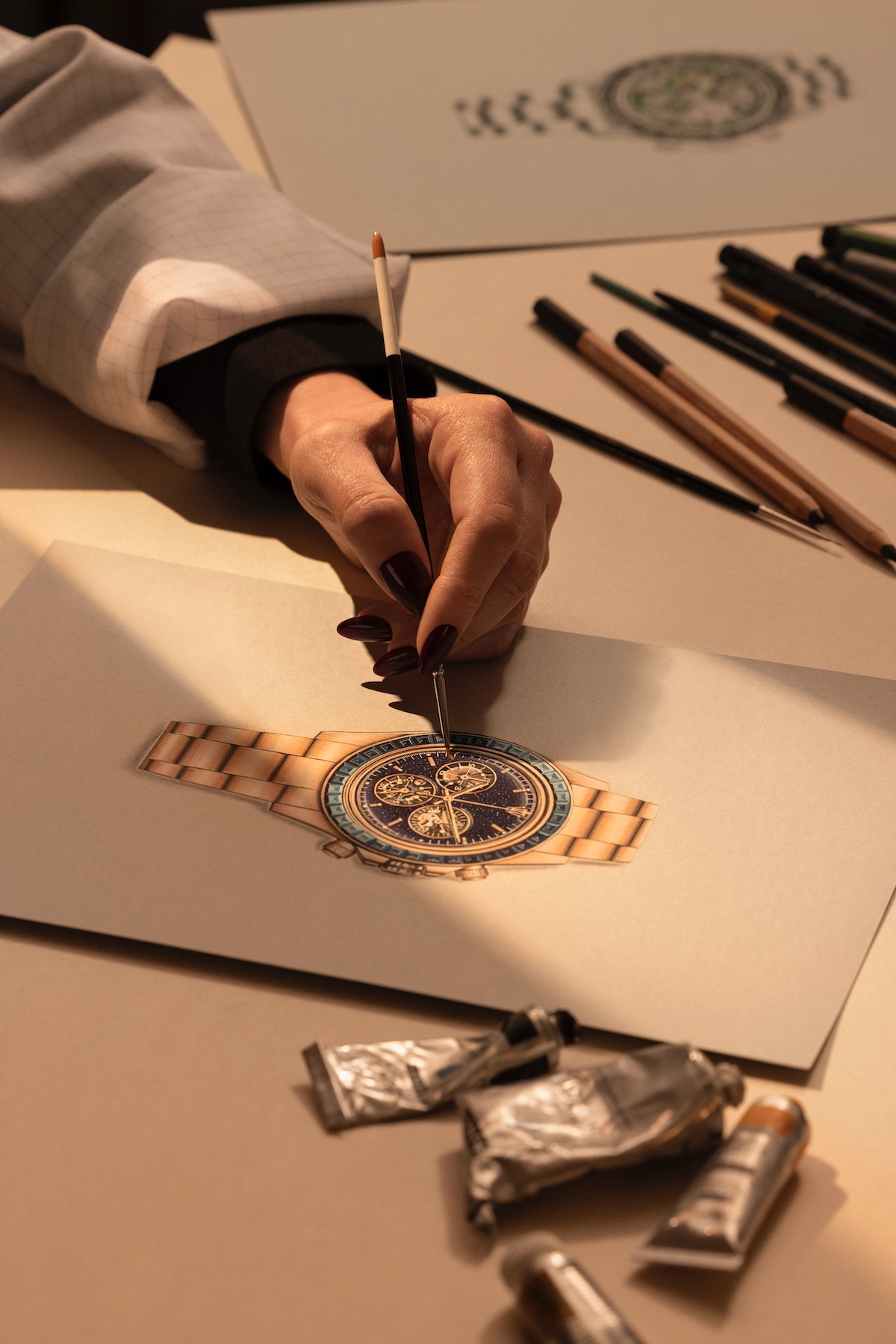
The current process draws on disciplines including technical design, gouache painting, prototyping, watchmaking and quality control. A client is purchasing more than an additional quantity of material. The fee also pays for professional time, coordination and decisions unavailable in a standard collection. This helps explain why a substantial bill can accompany an object without much additional metal. It does not remove the need for judgement. Did the intervention solve a design problem? Did it preserve useful legibility? Can the owner describe what actually changed? A compelling project name should begin that conversation, not substitute for an answer.
The 2024 distinction that mattered
In its judgment of 19 January 2024 in the dispute with Rolex, Switzerland’s Federal Supreme Court distinguished customising a customer’s property for personal use from marketing modified branded goods without the brand owner’s consent. It did not give blanket approval to every form of promotion: the case returned to the cantonal court for examination of how the service was offered and advertised. This was a distinction within a specific judgment, not the creation of an official partnership. A recognisable watch and a famous client do not, by themselves, establish manufacturer approval.
On 16 June 2025, the Federal Supreme Court set aside the subsequent cantonal judgment and remitted the case to Geneva again. It found that the lower court had not assessed the evidence about the workshop’s website as instructed, instead treating a party’s allegations as established facts. The 2024 decision therefore cannot be presented as a final clearance of every way Rolex trademarks might be used to offer or promote customisation services.

Authentic to the factory, or to the owner?
The manufacturer has a persuasive account of authenticity: the object as designed, made and documented within its own system. An owner may value another kind of fidelity, to personal taste or memory. These meanings can coexist, but they should not be confused. A modification may deepen attachment while making the watch less attractive to someone seeking factory condition. Rarity alone establishes no resale premium. Accurate records of what remains original, what was modified and what was newly made allow the intervention to be assessed on its merits. Admiration then remains a judgement about the object, rather than becoming an unsupported investment claim.
Kipchoge makes subtraction visible
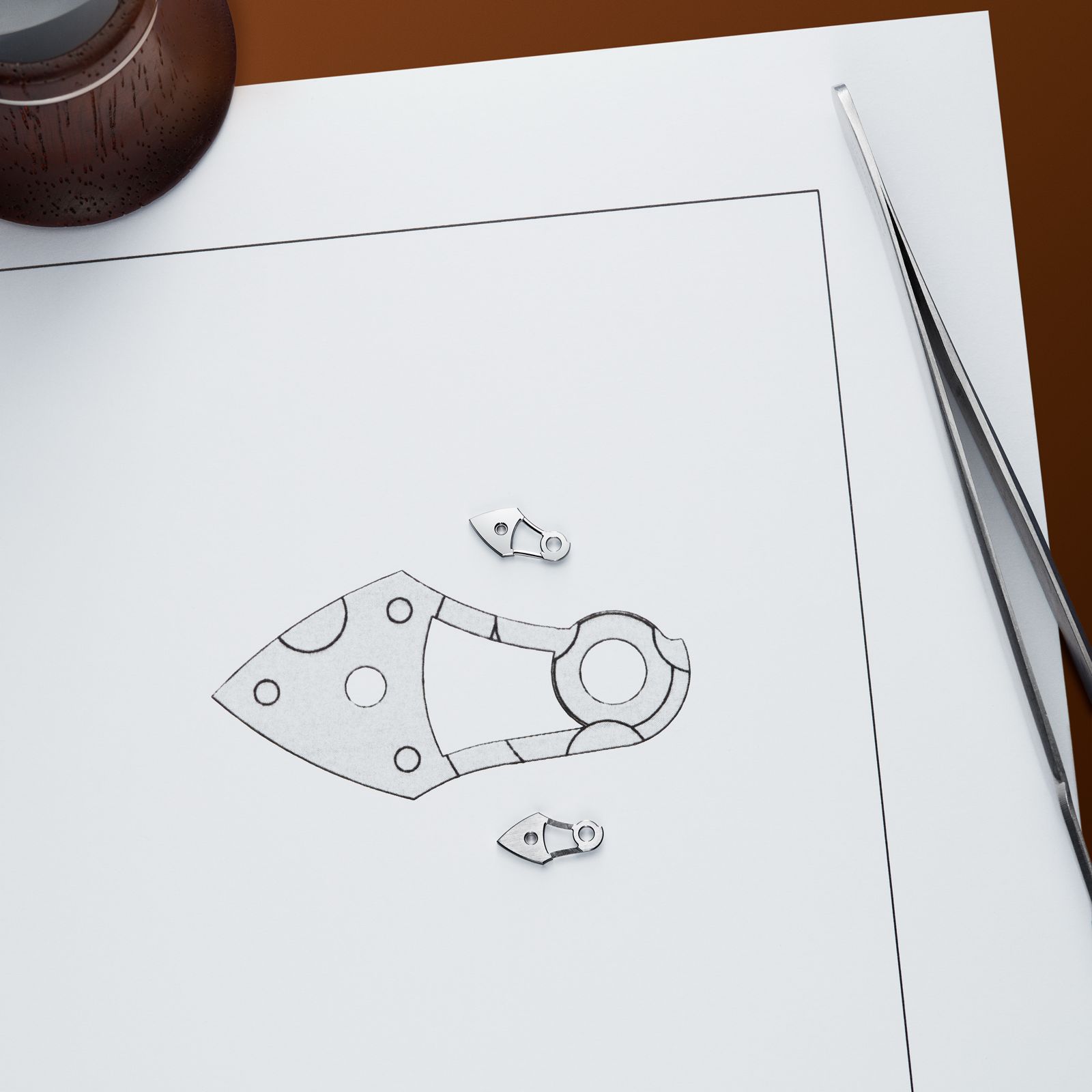
Eliud Kipchoge’s Feather project gives this argument a physical expression: a stated weight of 57 grams and a calibre 4130 adapted for manual winding. Its project page lists an estimated service fee of CHF 56,520 before tax, excluding the original watch. That is a published service estimate, not evidence of Kipchoge’s actual bill. The more interesting point is that luxury can involve taking weight away. An owner’s story can reorder the design priorities of a familiar object. This explains a possible personal value; it does not establish that the result is categorically better than the original Daytona.

Clarity is part of the workmanship
Artisans de Genève describes its present role as an independent workshop working on clients’ watches, without authorisation from their manufacturers. That distinction belongs near the appealing photographs. Execution can be assessed as craftsmanship, while origin, approval, servicing and warranty remain separate questions. Clear presentation makes the evaluation fairer to everyone. It avoids crediting the atelier with engineering supplied by the original maker, while recognising the transformation it has performed. It also gives an owner the vocabulary to describe the finished piece accurately. Transparency is more useful than asking a photograph to carry implications it cannot substantiate.

A different ending to ownership
This history reveals a market in which the customer’s role does not necessarily stop at payment. Some owners want to preserve a designer’s complete vision; others want to enter into a conversation with it. Either choice can support craft when the result is honestly described. The useful question is not whether every modification liberates or diminishes a watch. It is what a particular intervention achieves in meaning, execution and responsibility. Artisans de Genève has built its proposition around that test: a finished watch may be the end of the manufacturer’s story, yet still leave its owner with something to say.


